


Email remains one of the most widely used communication channels in the present enterprise environment and one of the most commonly targeted by attackers. While many organisations solely rely on SSL/TLS for protection of their email traffic, secure email encryption actually is more than just transport-layer protection.
SSL/TLS encrypts data in transit, but it does not guarantee end-to-end Confidentiality, Integrity and Authenticity (CIA) once the email message reaches intermediate systems or the mail servers.
To have a secure email is to ensure that all sensitive information remains guarded throughout its entire lifecycle, from the moment it is sent out by the sender till the recipient opens it. With the increase in remote work, more stringent regulatory requirements and a growing number of data breaches, organisations must move beyond SSL/TLS encryption to achieve higher email security postures.
We will explore why SSL/TLS alone is never enough, and how organisations can strengthen email security postures by using comprehensive encryption strategies.
Many believe that once email traffic is protected by SSL/TLS, the communication is secure. However, in reality, SSL/TLS only encrypts the part where the email is being transmitted between mail servers. So, once the email reaches a server, it will typically be decrypted and stored in plain text, making it vulnerable to attacks such as internal threats, compromised mailbox or server breaches.
A straightforward example would be sending a confidential letter in a locked courier truck and leaving it unsealed during storage in a warehouse. If adversaries gain access to the server, or if the emails are forwarded, archived or backed up, the original SSL/TLS encryption no longer applies.
As organisations increasingly exchange sensitive information such as contracts and financial data, only relying on SSL/TLS exposes them to compliance risks and data leakage. A stronger, more holistic email encryption approach is needed to address these gaps.
- End-to-End Email Encryption
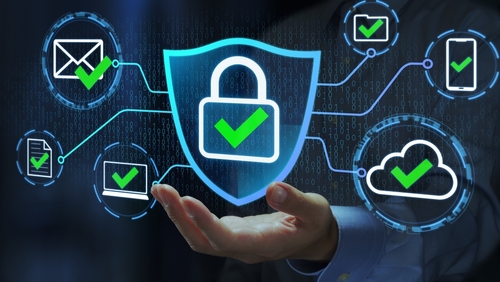
Emails will be encrypted at the sender’s side, and remain encrypted till decryption is done by the recipient. This will ensure only the intended recipient can decrypt and read the email content, preventing others, including mail servers, from accessing the email content.
Modern email encryption solutions can integrate seamlessly with common platforms like Outlook and Gmail. For external recipients who do not use the same encryption system, secure methods such as email verification or one-time passcodes can be used to authenticate the recipient and allow secure decryption through a browser.
By encrypting the email message itself, rather than just the transmission channel, organisations can ensure total confidentiality of the email message from sender to recipient. This significantly reduces exposure to server-side breaches and insider threats.
- Encryption at Rest
Data at rest, such as archives and backups require encryption as well, to prevent attackers from gaining access to the mail server or storage system. This encrypted data remains unreadable without the proper keys for decryption.
- Identity-Based Encryption and Key Management
A combination of Identity-Based encryption, centrally managed key systems, and hardware security tokens to simplify key management. Associating keys with user identities while storing private keys in USB tokens that cannot be replicated will help to prevent unauthorised decryption and support secure user onboarding and offboarding.
- Secure Email Gateways and Policy Enforcement
Secure email gateway solutions with built-in Data Loss Prevention (DLP) capabilities help organisations enforce encryption policies automatically. These systems can inspect email content and apply encryption based on predefined rules.
For example, emails containing personal data (PII) or financial information can be automatically encrypted before being sent, whether to internal or external recipients. This reduces reliance on users to make security decisions and ensures consistent protection across the organisation.
Best Practices / Tips
- Classify sensitive email content so encryption policies are applied automatically and consistently.
- Encrypt emails both in transit and at rest to cover the full data lifecycle.
- Secure external communications by integrating a third-party application for encrypted email exchanges with partners and customers with ease and usability.
- Centralise key management to reduce complexity and minimize human error.
- Audit and review DLP policies regularly to align with evolving threats and compliance requirements.
Lastly, and the most important point:
- Educate employees on the importance of email security to prevent data leakage.
These recommended practices help organisations to maintain a strong email security posture without burning out users or IT teams.
Conclusion
SSL/TLS is an important foundation for email security, but it is no longer sufficient on its own. Organisations must adopt strong encryption strategies that protect data end-to-end, at rest and across all email workflows. With comprehensive encryption, organisations can reduce breach risks, strengthen compliance and build trust in digital communication.
Netrust has been a trusted cybersecurity partner and solutions provider since 1997. We have decades of experience in end-to-end cryptographic processes, including encryption and decryption. Every bit of experience we have builds up to the megabytes of confidence you can place in us. Contact us today for a consultation on your encryption needs.
Follow us on LinkedIn for the latest happenings/updates.