

Cyber threats are becoming increasingly sophisticated, and organisations face growing challenges in protecting critical information and systems. While passwords remain the most common method of authentication, they are vulnerable to attacks such as phishing, credential theft, password spraying, and data breaches. As a result, relying solely on passwords is no longer sufficient to protect business applications, networks, and cloud services.
Multi-Factor Authentication (MFA) provides an additional layer of security by requiring users to verify their identity using more than one authentication factor before access is granted.
The Challenge
Many organisations still rely on usernames and passwords to secure access to business applications, VPNs, and cloud services. However, attackers can gain unauthorised access through sophisticated techniques such as phishing campaigns, brute-force attacks, credential stuffing, and the use of leaked credentials obtained from previous breaches.
Compromised credentials continue to be one of the leading causes of cybersecurity incidents worldwide. A single stolen password can expose sensitive business information, disrupt operations, and cause financial or reputational damage.
By adding an additional layer of authentication, organisations can significantly reduce the risk of unauthorised access, even if a password has been compromised.
Understanding Multi-Factor Authentication
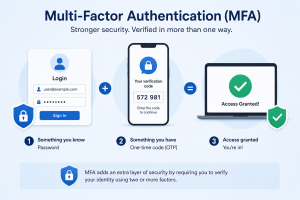
MFA enhances security by requiring users to provide two or more forms of verification before they can successfully authenticate. These factors typically include:
- Something you know – such as a password or PIN.
- Something you have – such as a hardware token, mobile authenticator application, or security key.
- Something you are – such as a fingerprint or facial recognition.
Modern MFA solutions support a variety of authentication methods, including hardware tokens, mobile authenticator applications, push notifications, and phishing-resistant authentication methods, enabling organisations to strengthen access security while balancing usability and user experience.
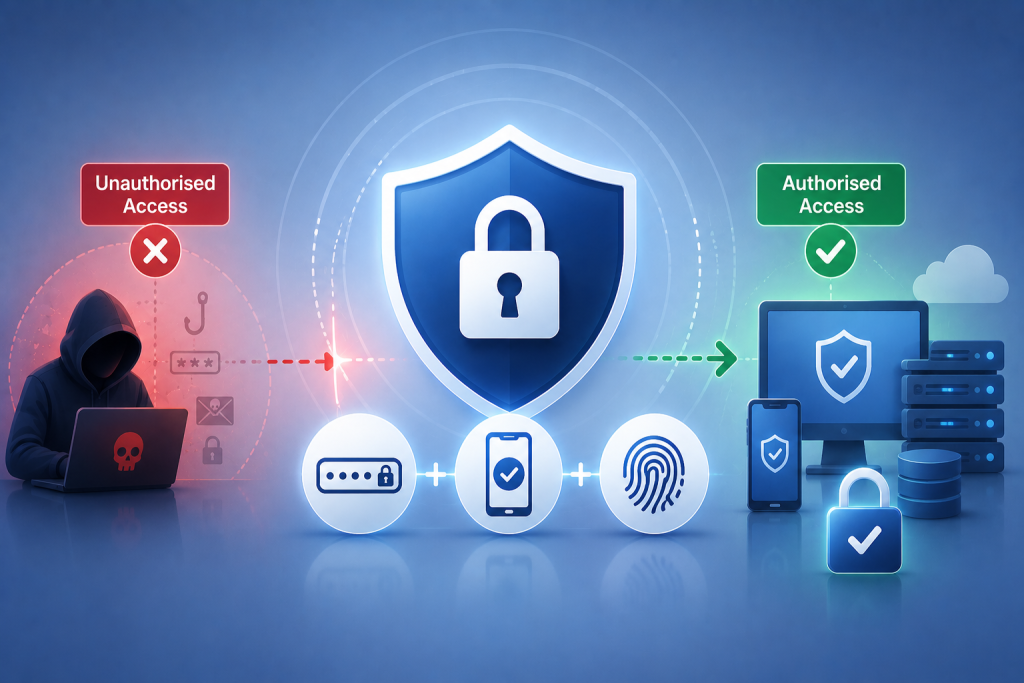
By requiring users to verify their identity using more than just a password, MFA significantly reduces the risk of unauthorised access, even if credentials are compromised through phishing, data breaches, or other cyberattacks.
Best Practices for MFA Deployment
To maximise the effectiveness of MFA, organisations should consider the following best practices:
- Enforce MFA for all remote access and privileged accounts.
- Protect critical business applications and cloud services with MFA.
- Adopt phishing-resistant authentication methods whenever possible.
- Educate users on cybersecurity awareness and phishing threats.
- Regularly review authentication policies and user access rights.
- Monitor authentication activities and investigate suspicious login attempts.
- Disable legacy authentication methods that may bypass MFA protections.
Conclusion
As cyberattacks continue to evolve, MFA has become an essential component of a modern cybersecurity strategy.
By implementing MFA, organisations can significantly reduce the risk of unauthorised access, support regulatory compliance, and strengthen their overall security posture.
Implementing MFA today is a practical and effective step toward protecting users, systems, and sensitive business data against increasingly sophisticated cyber threats.
Follow us on LinkedIn for the latest happenings/updates.