
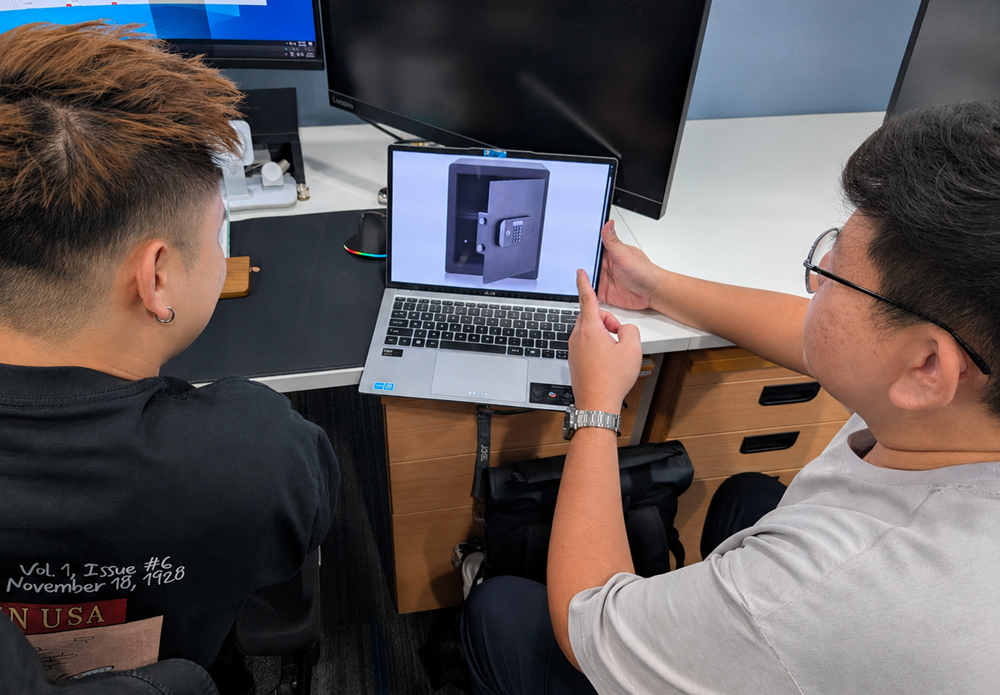

A while back, I was explaining encryption to my colleague and used this analogy:
“Your data today is locked inside a really strong safe.”
That’s still true, but here’s the part people don’t think about:
What if someone is already copying that same safe and is waiting for the day they can open it?

That’s essentially what’s happening with quantum computing.
Most of today’s security (PKI and digital certificates) relies on encryption methods such as RSA and elliptic curves. They’ve worked well for years. But quantum computing changes the game. It introduces a way to potentially break these systems much faster than we ever expected.
That’s where Post-Quantum Cryptography (PQC) comes in. It’s not just a buzzword; it’s the next step in making sure the “safe” stays locked, even in a quantum future.
The Risk Isn’t “Later” … It’s Already Happening.
A common reaction I hear is:
“Quantum computers aren’t here yet, so we still have time.”
Technically true. Practically risky.

There’s a strategy that attackers are already employing called “harvest now, decrypt later.”
They collect encrypted data today, even if they can’t read it, and store it.
Then, when Q-Day comes (Quantum computers become powerful enough to break widely used encryption protocols), they decrypt it.
So, the real question becomes:
How long does your data need to stay secret?
If the answer is years (and for most businesses, it is), then the risk isn’t in the future. It’s already sitting in someone else’s storage.
So… What Can You Actually Do About It?

You don’t need to rip everything out and start over. But you do need to start moving.
- Figure Out Where You’re Using Encryption
Most teams don’t have full visibility here. Encryption is everywhere: servers, APIs, internal apps, even IoT devices.
Start by mapping it out. Especially anything using RSA or ECC. - Make Your Systems Flexible (Crypto-Agility)
One of the biggest mistakes is treating cryptography as something static.
It shouldn’t be.
You want the ability to switch algorithms without rebuilding your entire infrastructure. That’s what crypto-agility is about, and it’s going to matter a lot as PQC standards evolve. - Don’t Do This Alone
The good news is you’re not expected to figure this out from scratch.
Certificate Authorities and security vendors are already working on quantum-safe and hybrid solutions. The smart move is to work with partners who are already testing and rolling these out.
A Few Practical Tips That Actually Help
- Start with data that needs to stay secure long-term (financial records, contracts, sensitive customer data).
- Turn on logging and monitoring for your certificates. Visibility matters more than people think.
- Test your automation scripts early so future changes don’t break production.
- Keep an eye on NIST updates, that’s where the standards are being finalised.

Final Thoughts
You don’t need to panic about quantum computing.
But you also can’t ignore it.
The biggest mistake isn’t being unprepared today; it is assuming you can fix everything later. Because if your data is already harvested, “later” might be too late.
Getting started now, even with small steps, puts you in a much better position than playing catch-up down the road.
Ready to make your security simpler and future-proof your data?
Let’s talk about how you can stay one step ahead of emerging quantum risks.
Follow us on LinkedIn for the latest happenings/updates.