


From Search Engine to AI: A Developer’s Journey Through Changing Paradigms
As a developer in my 40s, I have seen how our way of working has evolved over the years.
Back then, solving a problem usually meant opening Google and going through multiple tabs—Stack Overflow threads, API documentation, random blog posts, trying different approaches until something finally worked. It was often trial and error, and sometimes more “trial” than “success.”
At the same time, as systems became more complex, we were not just writing code anymore. We had to consider non-functional requirements like security, reliability, and scalability. To meet these demands, we started relying on more tools to support our development work.
Today, with the introduction of AI, things have changed again.
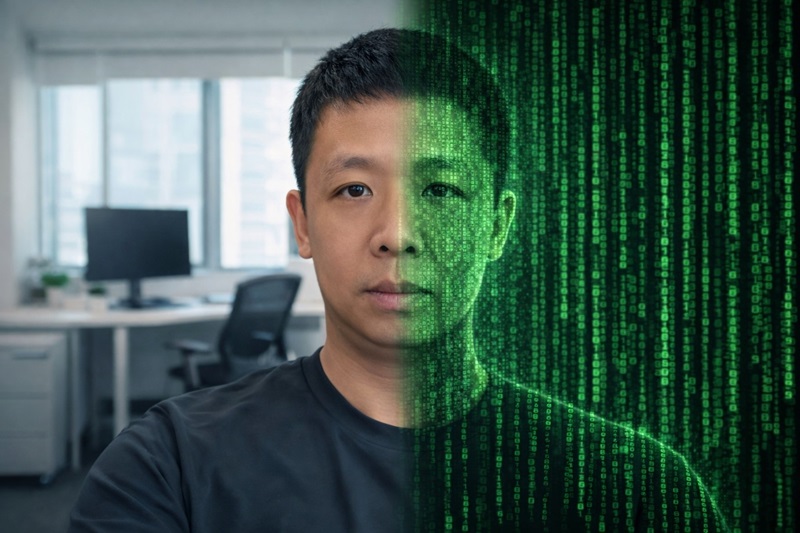
The Shift: From Searching to AI-Assisted Development
Previously, debugging an issue could take hours. You might encounter an exception, search for it online, compare different solutions from various sources, and then try to piece together what works for your specific case.
Now, with AI, the experience is very different.
Instead of navigating across multiple sources, AI can get a consolidated and contextualised response almost instantly. It does not mean that the answer is always perfect, but it significantly reduces the time spent searching and experimenting.
Beyond just asking questions, AI is also evolving into something more powerful, AI agents.
These are not just tools that respond to queries, but “workers” that can perform tasks. They can help generate code, run tests, automate workflows, and even iterate on tasks with minimal input. In a way, we are moving from using AI as a reference tool to working alongside AI as part of our development process.
Naturally, this leads to a big improvement in productivity.
Balancing Innovation with Responsibility
While AI brings clear benefits, it is not without its limitations.
From experience, AI can assist with design, but it still struggles with deeper, context-heavy decisions—such as understanding business constraints, making architectural trade-offs, or designing complex systems properly. These are areas where human judgment remains crucial.
Another key concern is data privacy.
When we use AI tools, the prompts and data we provide may be used for model improvement or training, depending on the platform and configuration. This becomes a risk when dealing with sensitive information such as proprietary code, credentials, or regulated data.
Because of this, it is important to define data sensitivity clearly before using AI. Not all data should be shared, and organisations need to establish proper guidelines.
On top of that, we must remember that AI-generated outputs still require validation. It is easy to accept an answer because it “looks correct,” but without proper verification, this can introduce risks into production systems.
The Evolving Role of the Developer
AI does not just change how we code—it changes what it means to be a developer.
There are concerns that relying too much on AI may weaken our fundamental skills. If we depend on AI to generate solutions without fully understanding them, we may lose the ability to reason through problems ourselves.
At the same time, AI is also one of the most patient “teachers” we can have. There is no hesitation in asking basic questions, repeating mistakes, or exploring unfamiliar topics. It provides a safe space to learn and improve continuously.
So, the impact of AI really depends on how we choose to use it.
I like to think of it as inheriting a great fortune. We can either invest it wisely to grow our capabilities over time, or we can simply consume it and become overly dependent on it. The outcome is entirely up to us.

Looking at the bigger picture, the role of developers has always evolved.
In the early days, programming was close to machine-level instructions. Over time, higher-level languages abstracted complexity and made development more human-readable. Then came the rise of full-stack development, where a single developer could handle frontend, backend, and even database design.
More recently, with the adoption of DevOps and CI/CD practices, developers are also involved in infrastructure setup, deployment pipelines, and automation scripts. Writing code is no longer limited to application logic—we now touch every aspect of a system’s lifecycle.
AI is simply the next phase of this evolution.
In future, developers may spend less time writing every line of code manually, and more time orchestrating multiple AI agents—assigning tasks, validating outputs, and ensuring everything comes together correctly. In a way, we are moving from being implementers to coordinators and decision-makers.
Conclusion
AI is not the end of programming—it is a continuation of it.
There is no perfect solution in technology. Every tool comes with its own strengths and limitations. While AI offers significant gains in productivity and learning, it also introduces new challenges that we must understand and manage.
As we enjoy the benefits of AI, we must remain aware of its limitations and decide whether we can accept or mitigate them.
When it comes to AI replacing humans, I personally do not see a “Skynet” (in the movie, Terminator) scenario becoming reality. Instead, it feels closer to an Iron Man scenario—where technology augments human capability rather than replaces it. AI becomes an extension of us, helping us make better decisions, move faster, and build more effectively.

At the end of the day, AI is just a tool. How much value we get from it depends on how we use it.
For developers, the goal should not be to rely on AI, but to evolve with the technology.
Follow us on LinkedIn for the latest happenings/updates.