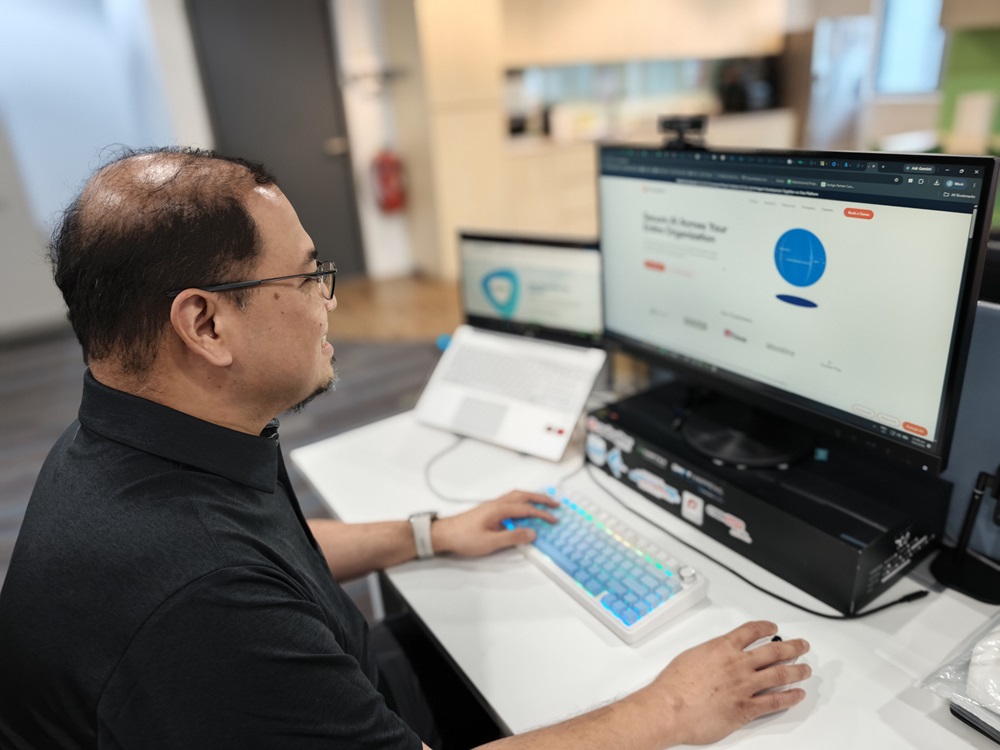

I’ve spent a decade in tech, thinking I had a solid track record of spotting phishing emails, or that I could spot a phishing scam from a mile away. You know the ones with weird content, e.g., “Dear Valued Customer,” or a random bank I’ve never used telling me my account has been locked out.
But lately, things have changed. A few months back, I got an email from a coworker. It sounded exactly like him. It mentioned a specific project we were actually working on. He even used his habit of ending every sentence with “…” instead of a full stop. It was spot on.
And it was 100% fake.
We’re officially in the era of Agentic AI threats. Honestly, it’s a bit of a nightmare for everyone, whether you’re an employer or employee. We’re not just protecting against hackers anymore; we’re up against autonomous software that can pivot, think, and impersonate people we know better than most.
A Reality Check: What’s Actually Hitting Us Now
In 2026, the stuff we used to whisper about at tech conferences is just a normal Tuesday. Here’s what’s keeping me up:
- Phishing that ‘lives’: Templates are dead. AI agents are crawling LinkedIn and company blogs to build a psychological profile of you. They do not just send an email; they start a conversation.
- Shadow AI ‘Helpers’: My team is great, but they are obsessed with speed. They have started using these little unauthorised AI agents to automate tasks. The problem is that these agents have broad permissions and zero oversight. They are basically a back door we did not ask for.
- Malware that evolves: We are seeing code that rewrites itself every time it moves.
For years, we treated security like building a castle: higher walls, deeper complexity. But if the threat is an AI that can fly over the wall, the complexity does not matter.

I had to change my mindset. I stopped looking for ‘bad files’ and started looking for intent.
I started hunting for something that does not just sit on the edge of the network. I needed a ‘digital immune system’. Something that actually understands the context of what’s happening – the network, the identities, and the data itself.
Finding the ‘Truth Layer’
The turning point was realising that identity is the new perimeter. If an AI can pretend to be my boss, any firewall is basically a paperweight.
I moved towards a strategy that hits three big areas:
- Behavioural Baselines: Knowing what ‘normal’ looks like so well that even a 1% shift sticks out immediately.
- Autonomous Response: If something breaks at 3 am, I do not want an alert. I want a system that shuts it down before anything bad happens.
- Unified Visibility: One spot to see everything – cloud apps, servers, and those ‘shadow’ AI agents everyone loves so much.
The Result?
I will not tell you I’m 100% ‘safe’. Nobody is. But I’ve gone from constant anxiety to a kind of informed resilience. The tech we’re using now does not just wait for a virus. It watches the behaviour of everything in the network. It sees that ‘coworker’ is asking for a password and realises that, while the words are perfect, the request can be very strange unless you are alert about it.
It’s about fighting fire with fire. If the bad guys are using AI to scale, we have to use it to scale our own intuition and understanding.
So, how are you handling the shift? Are you still building walls, or are you looking for a better way to see through the noise? If you are ready to move past the uncertainty, contact Netrust if you are interested in an AI threat solution that is with you every step of the way.
Follow us on LinkedIn for the latest happenings/updates.